
735 Main Rd, Edgeworth,
NSW, 2285


You know that moment when your dog yawns and you instinctively lean back a little too quickly? You love them, and that smell is normal doggy breath, right? Unfortunately, no, it’s probably not. Bad breath is typically much more than that. It’s quite often an early warning sign that something isn’t quite right in their mouth. It can mean dental problems or disease are already starting to develop under the gumline.
At Edgeworth Animal Medical Centre, we’re a local, independent clinic caring for pets of all kinds, from furry to feathery to scaly. And dental health is something we’re really passionate about. We know many owners are not extremely familiar with it, but it has a direct impact on a pet’s overall health. There are also plenty of myths out there, which makes it easy to overlook initial symptoms or assume they are nothing to worry about.
“Bad breath is often just the first warning sign of a much deeper dental problem.”
Why bad breath is often the first sign of dental disease
You might call it doggy breath, but in the veterinary world, we call it halitosis. It’s one of the first clinical signs of periodontal disease (which affects up to 80% of dogs and 70% of cats to some degree). The odour comes from plaque-associated bacteria building up along the gumline. Even while the actual teeth still look fine, this bacterial layer can trigger painful inflammation in the gums.
Many owners get used to the smell, especially when they have older pets, and it can delay intervention at a stage where the disease is still very manageable. And this is just one reason dental disease is easy to miss at home. Calculus buildup can also mask underlying problems, such as fractured teeth or deeper infections. Behavioural changes tend to be subtle or gradual, and animals are very good at hiding pain, so without obvious signs of discomfort, it is easy to assume nothing is wrong. Sometimes, owners may notice brown teeth from calculus accumulation or red, bleeding gums, but in many cases, there may be no visible signs at all.
As mentioned, dental disease is highly treatable in the early stages of halitosis and mild gingivitis. But once it advances, it leads to loss of attachment around the tooth, infection and frequently, the need for dental extractions. Treating it sooner is far less invasive.
Why a quick look in the mouth is not enough
It’s not just at home that a quick look can miss serious dental disease. The same applies in the veterinary clinic. Pets don’t tolerate thorough oral exams the way people do, even with calm handling. The clinic environment can make them anxious or resistant, which limits how far back we can safely examine. In most cases, we are only able to get a brief look at the front teeth. Anything deeper than that can easily be missed during a routine consult.
Dogs have 42 teeth and cats have 30, and many of them sit right at the back where we simply cannot see. Areas like the molars, gum margins and periodontal pockets are near impossible to assess in a conscious patient, especially without proper positioning and the right tools. And even beyond what we can physically access, teeth that look completely fine on the surface can still have disease affecting the deeper structures underneath.
What is a ‘dental’?
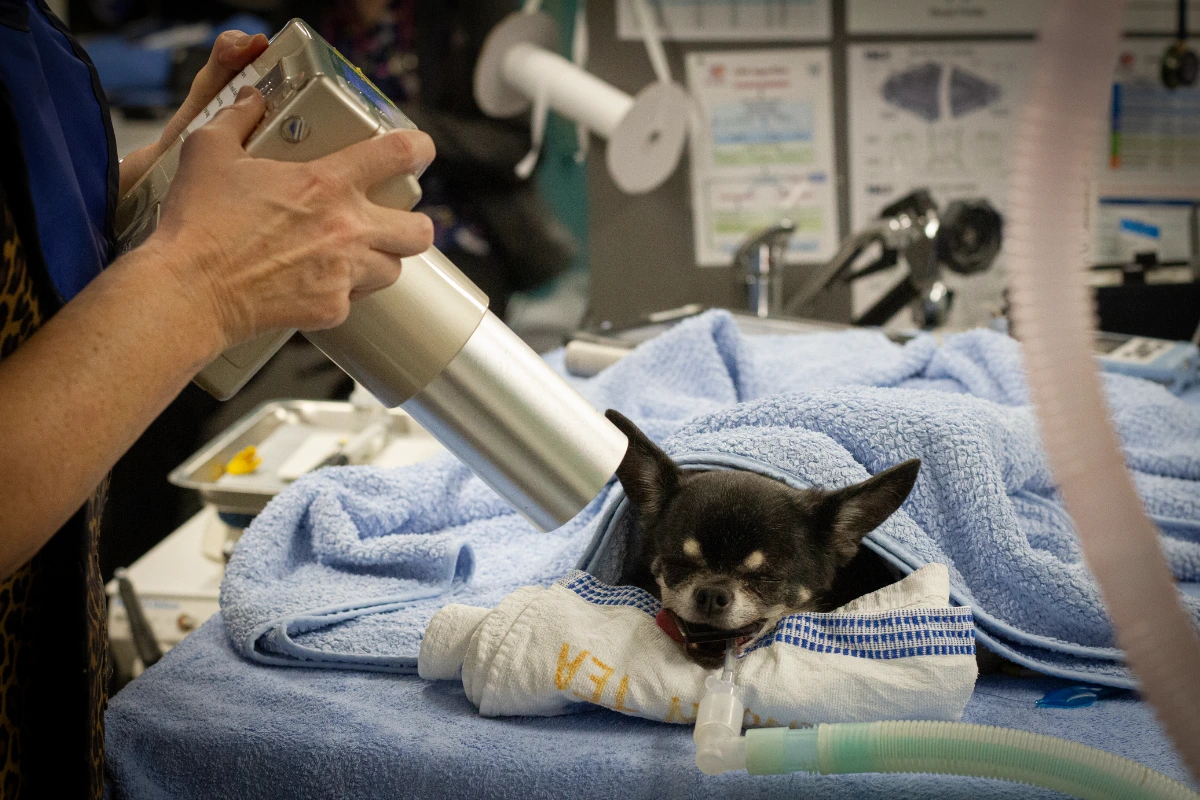
A proper assessment requires a COHAT, or Comprehensive Oral Health Assessment and Treatment. While many people think of this as just a “dental”, it is far more involved. Pets are admitted for the day and placed under general anaesthesia so the mouth can be fully examined, including areas below the gumline that cannot be seen otherwise. This typically includes full mouth dental X-rays to assess the tooth roots and surrounding bone.
Each tooth is individually assessed and charted by probing around the gumline to measure pocket depth, checking for damage to the crown and looking for signs of periodontal or endodontic disease. The surrounding structures are also examined, including the tongue, salivary glands and lymph nodes, with any masses or abnormalities investigated further if needed.
Throughout the procedure, the airway is protected with an endotracheal tube and the patient is maintained on gas anaesthesia with continuous monitoring. Once assessment is complete, the teeth are thoroughly cleaned above and below the gumline using ultrasonic and hand scaling techniques, then polished to create a smooth surface that slows plaque build-up.
Depending on what is found, additional treatments may be performed, including extractions of diseased teeth or therapies to support healing of the surrounding tissues.
Recently, I saw an older dog that initially appeared to have standard periodontal disease and was likely needing extractions. Once under anaesthesia, a different issue was found at the back of the mouth. The cheek was being caught between the molar teeth, causing ongoing trauma and inflammation that was not visible during the initial exam. Treatment involved removing the overcrowded teeth, which should significantly improve the dog’s comfort moving forward.
Dental problems that go beyond the surface, and what they can lead to
Broken teeth are common due to everyday chewing habits. Bones, sticks and other hard objects can cause what we call slab fractures, especially in the large carnassial teeth at the back of the mouth. Once the enamel is damaged, the underlying dentin is exposed. This rough surface allows plaque and calculus to build up freely, potentially hiding the damage altogether. Even if the pulp is not visibly exposed, bacteria can still travel through microscopic channels within the tooth and lead to infection. In more advanced cases, this can develop into a tooth root abscess, which can actually sometimes present as swelling under the eye. When caught early, some teeth can be restored. Left too long, extraction is often the only option.
There are also structural issues that can cause ongoing pain without being obvious. Malocclusions, or misaligned bites, can lead to teeth pressing into soft tissue or wearing against each other over time. This is often seen in young dogs, particularly when lower canine teeth sit too far inward, and in brachycephalic breeds where crowding is common. Even when considered normal for the breed, these bite patterns are not always comfortable.
What often surprises owners is that dental disease does not stay confined to the mouth. Periodontal disease is driven by bacteria and ongoing inflammation, and over time, this creates a pathway for bacteria to enter the bloodstream. This can happen during everyday activities, such as chewing. From there, it can contribute to changes in other parts of the body, and it has been linked to heart, kidney and liver disease. The body is essentially dealing with a constant low-level inflammatory burden, which can also affect how it regulates things like blood sugar.
For this reason, dental disease is not just about teeth. It is something that can have a much broader impact on a pet’s overall health if left untreated.
Are some pets more at risk of dental disease?
| Factor | What to know |
| Breed | Greyhounds, Poodles and Maltese are more prone to periodontal disease. Boxers commonly develop gum overgrowth. In some breeds, issues can still progress despite good home care. |
| Skull shape | Brachycephalic breeds often have crowded teeth, which limits natural cleaning and allows plaque to build up more easily. |
| Age | Dental disease becomes more common with age. Older pets often need dental care the most, and delaying treatment can worsen their overall health. |
“Dental disease doesn’t just affect the mouth—it can impact your pet’s overall health and wellbeing.”
Small signs, bigger consequences
Many owners assume everything is fine because their pet is still eating, but that can be misleading. Pets will often continue to eat despite significant pain. It is always best not to assume and to keep up with regular veterinary checkups, including COHATs.
We also often see some hesitation around anaesthesia, particularly in older pets, which can delay treatment, even though these are often the ones who benefit most. However, owners frequently notice how much brighter and more comfortable their pet seems after treatment.
At Edgeworth Animal Medical Centre, we offer high-quality pet dental services. Contact us to learn more, or book an appointment to check your pet’s oral health today.
By Dr Nicole Melhem
Veterinary Services
Trusted veterinary care across every life stage, from vaccinations and surgery to diagnostics, dental, and exotic care.


Frequently Asked Questions
Is bad breath in pets always a dental issue?
Not always. While bad breath is commonly linked to dental disease, it can also signal underlying health problems such as infections or systemic illness. It’s important to have your pet checked by a vet to determine the cause.
How common is dental disease in pets?
Dental disease is extremely common, affecting the majority of pets during their lifetime. In many cases, it develops quietly and isn’t noticed until it becomes advanced and painful.
What are the early signs of dental problems in pets?
Early signs include bad breath, plaque or tartar buildup, red or inflamed gums, and subtle changes in eating behaviour. Pets often hide discomfort, so symptoms may not be obvious at first.
Why is pet dental health important beyond the mouth?
Dental disease doesn’t just affect the teeth and gums—it can impact overall health. Bacteria from the mouth can enter the bloodstream and potentially affect organs such as the heart, kidneys, and liver.
What happens during a professional dental procedure for pets?
A veterinary dental procedure typically involves a full oral examination under anaesthesia, dental X-rays, cleaning below the gumline, and assessment of each tooth to identify hidden issues.

Contact Info


After-Hours Emergencies
Contact AREC(Animal Referral & Emergency Centre)
1300 838 669