
735 Main Rd, Edgeworth,
NSW, 2285


Most of us would recognise our pet from the way they walk alone. And it can be a little alarming when there’s a change in gait, whether it’s as subtle as a small pause, favouring one side over the other or a step that doesn’t look right. You’ve probably wondered at least once whether a limp will improve on its own or whether it’s something serious. The truth is, it may or may not. There are a wide range of causes for lameness in cats and dogs.
At Edgeworth Animal Medical Centre, we’re a local, independent clinic offering advanced care for bones and joints in pets. We’ve seen plenty of much-loved creatures hobble into our clinic for all kinds of reasons. Lameness is a symptom, not a diagnosis. Here’s what you need to know.
“Lameness is a symptom, not a diagnosis.”
About lameness in dogs and cats specifically
Dogs
The causes of lameness can be quite different between dogs and cats. For our canine friends, some common causes of front limb lameness include shoulder and elbow osteoarthritis, along with nail bed injuries and infections. Less commonly, fractures, cuts and bone tumours can also be responsible. While these conditions are not seen as often, early diagnosis is extremely important.
When it comes to the back limbs, cranial cruciate ligament disease is one of the most common causes of lameness we see in dogs. In fact, it accounts for around 70 per cent of hind limb lameness cases. Many owners assume it happened during a run at the park or a game of fetch, but in reality, it is usually a degenerative condition that develops over time. Luxating kneecaps are another common cause, particularly in smaller breeds. Dogs will often suddenly hold a back leg up before returning to normal once the kneecap slips back into place… until next time.
Hip and knee osteoarthritis are also frequently culprits, as are injuries affecting the feet, nails and hocks. The good news is that many of these conditions respond well to medical management, while others can be treated surgically when needed.
Cats
Cats are a little different. One of the most common causes of lameness is a cat fight abscess, followed by trauma such as being hit by a car, attacked by a dog or falling from a height.
In many cases, a cat with an abscess may also seem generally unwell. Once the infection is drained and treated, they often return to their normal selves remarkably quickly. Less commonly, cats can also develop orthopaedic conditions such as luxating kneecaps, poor hip conformation and cruciate ligament injuries.
Signs that suggest a limp might need veterinary attention
Whenever there’s concern for a pet, one of the first things an owner wants to know is when they should get help or see their regular vet.
Things that should prompt a visit include an unwillingness to bear weight on the leg, lameness that has been persistent or present for some time, a limp that gets worse with exercise and doesn’t improve or “warm out of it” with movement, and any history of trauma.
As an important side note, in cases where a pet does warm out of it, osteoarthritis may be involved, and medical therapy can often help.
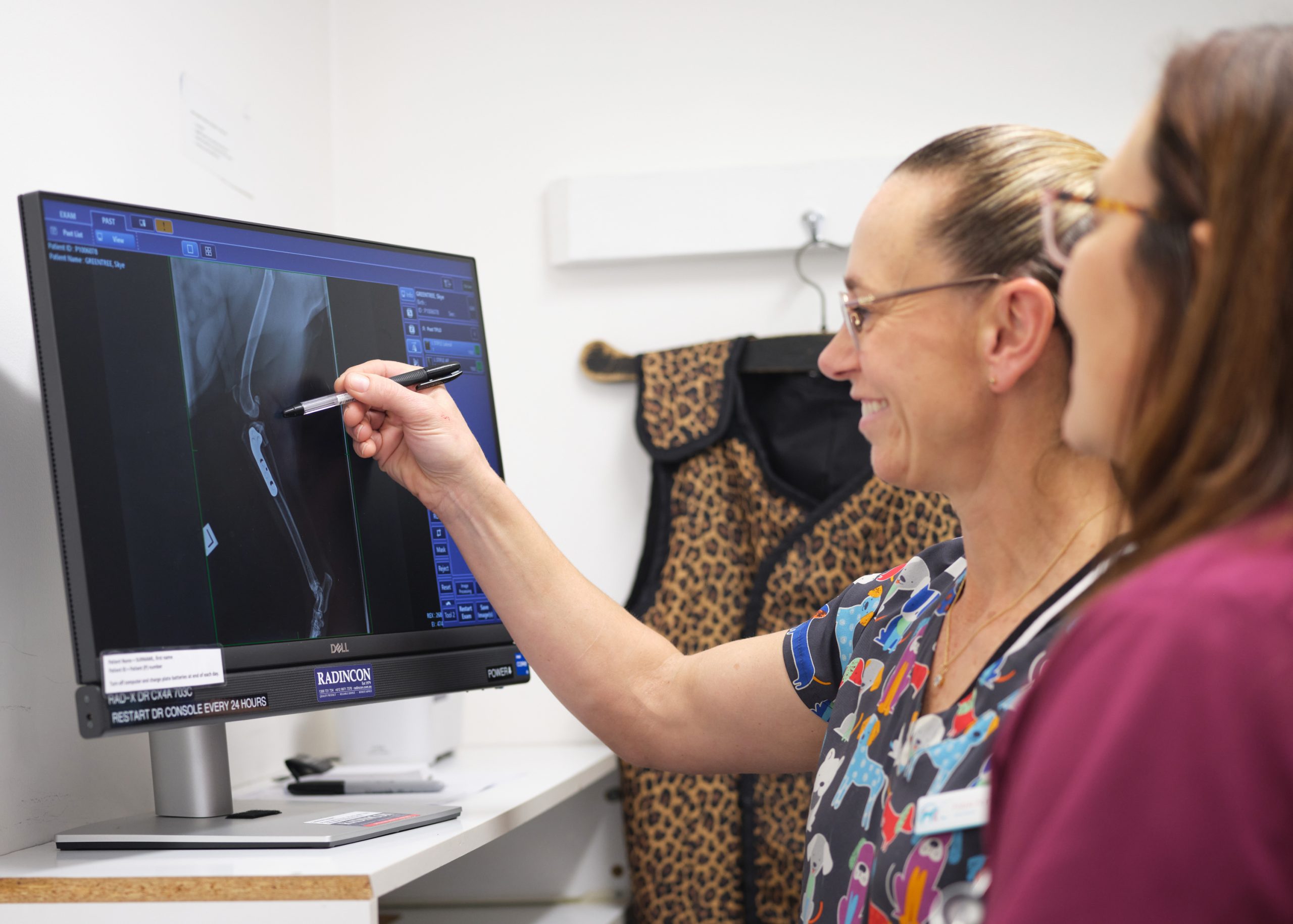
How we investigate lameness when the answer isn’t obvious
When a patient with a limp comes to see us for answers, we start with a careful examination and a full history. We’ll ask owners when it happens, what it looks like and whether anything seems to make it better or worse. Videos taken at home can be really helpful. Watching videos filmed using the slow-motion function on your phone can help us look for a head bob that may give away even subtle lameness, particularly in front limbs and breeds that are low to the ground, but footage of the limp at its worst is ideal.
We’ll complete a full physical examination of each joint during the consult and have the pet walk at different speeds outside the clinic. This helps us identify subtle abnormalities that may not be obvious when they’re standing still.
For example, a pet that consistently sits with a knee pointed away from the body may have knee pain, while a hind leg lameness can sometimes be picked up through a subtle “tripod stance”, where one back foot is always positioned slightly in front of or behind the other.
Sometimes, we may not see any evidence of a “bony” issue, and so blood tests or other diagnostics may be required. The answer is not always in the joints themselves.
Why waiting can change the outcome
The consequences of delaying assessment really depend on the cause of the lameness. In some cases, it may just mean a pet spends longer in discomfort than they need to. In others, however, waiting weeks or months can lead to additional damage and limit the benefits of treatment later on.
For example, if cruciate ligament disease is responsible, severe osteoarthritis can develop in the knee surprisingly quickly when it is left untreated. In fact, within just a few months, those effects can typically be seen on radiographs. While surgery can restore stability to the knee, it can’t reverse osteoarthritic damage that has already occurred. This is why early diagnosis and treatment are crucial.
The benefit of knowing
A limp in a dog or cat, particularly a senior pet, can be alarming for owners. It’s not uncommon to worry not only about their health and wellbeing, but also what the diagnosis and treatment might cost or involve. Sometimes it can be a more significant issue than hoped, but the earlier we can identify what’s going on, the more options there are likely to be for your pet.
One of the most common misconceptions about lameness is that it is always arthritis or “just getting old”. As we’ve covered, there are plenty of other causes, including some that owners may not expect, like immune-mediated lameness. That said, this is rare and usually seen in a dog that is systemically unwell. The main thing to keep in mind is: if a pet is limping, they are likely in some sort of pain. And if your furry friend is living with pain, it is worth finding out whether there is something we can do to improve their quality of life. Sometimes, that can be as simple as medication.
At Edgeworth Animal Medical Centre, we offer advanced orthopaedic care, including surgery, and we can comprehensively assess your pet to find out what’s behind their limp.
Contact us to learn more or book an appointment.
By Dr Perin Patterson
“If a pet is limping, they are likely in some sort of pain.”
Veterinary Services
Trusted veterinary care across every life stage, from vaccinations and surgery to diagnostics, dental, and exotic care.


Frequently Asked Questions
What are the most common causes of lameness in dogs and cats?
The causes can differ significantly between species. In dogs, common causes include osteoarthritis, cruciate ligament disease, luxating kneecaps and injuries affecting the feet, nails and hocks. In cats, lameness is often linked to cat fight abscesses or trauma such as falls, dog attacks or vehicle accidents.
When should I take my pet to a vet for a limp?
A limp should be assessed if your pet is unwilling to bear weight on a leg, if the lameness has persisted for some time or if it becomes worse with exercise. Any history of trauma should also prompt a veterinary examination, as injuries are not always obvious from the outside.
Can a limp be caused by something other than arthritis?
Yes. While arthritis is a common cause of lameness, it is far from the only one. Depending on the pet, lameness may be related to ligament injuries, infections, trauma, abscesses, fractures, luxating kneecaps or other orthopaedic conditions.
How do vets work out the cause of lameness?
Veterinary care for lameness begins with a detailed history and physical examination. Your local vet will assess each joint, observe your pet walking and may review videos taken at home, particularly if the limp is intermittent or difficult to reproduce during the appointment.
Why is it important not to ignore a persistent limp?
The impact depends on the underlying cause, but some conditions can worsen if left untreated. For example, cruciate ligament disease can lead to significant osteoarthritic damage within a matter of months, and while surgery can restore stability to the joint, it cannot reverse damage that has already occurred.

Contact Info


After-Hours Emergencies
Contact AREC(Animal Referral & Emergency Centre)
1300 838 669