
735 Main Rd, Edgeworth,
NSW, 2285


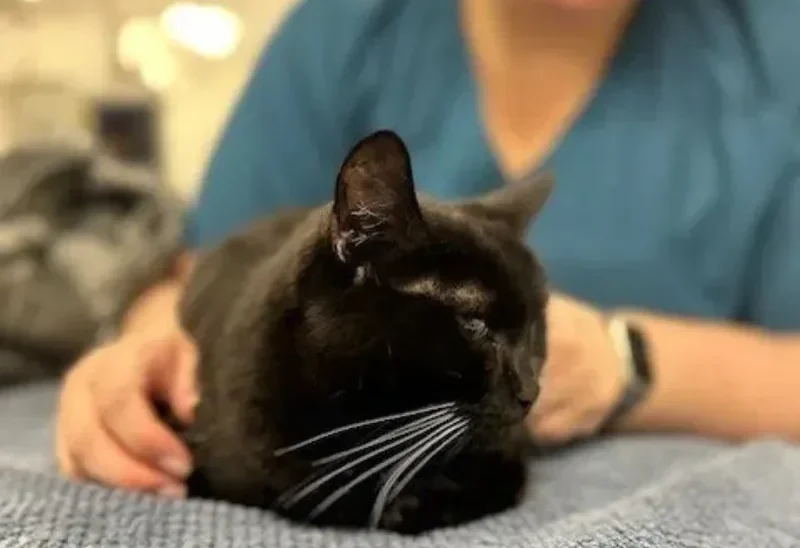
A Routine Health Check Uncovered Something More
Midnight is a beautiful 7-year-old cat who came to see us for her annual health check and vaccination.
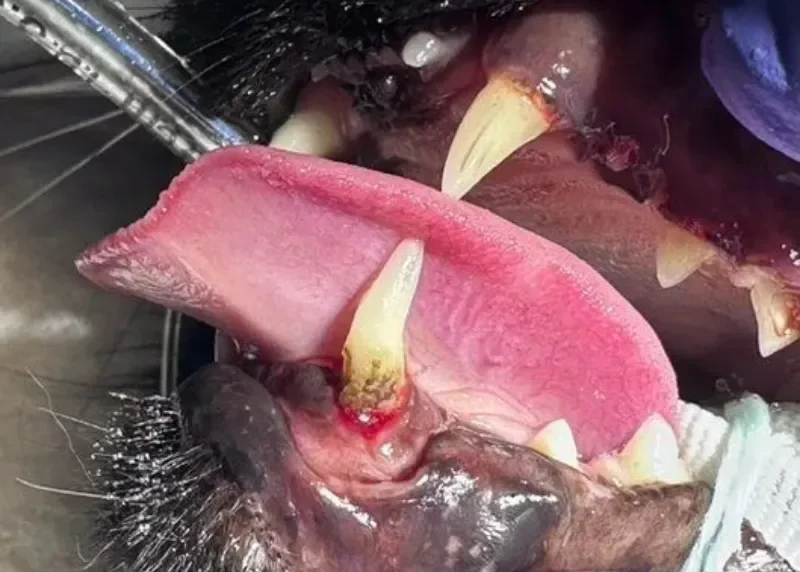
During this appointment, we found her lower left canine tooth was severely diseased, with advanced periodontal disease, infection around the tooth and heavy calculus build-up affecting her other teeth.
To properly assess the extent of her condition, we recommended a dental procedure under general anaesthetic that would include a thorough oral examination, dental X-rays, cleaning her teeth and treating the painful tooth.
“Cats are incredibly good at hiding dental pain, even when they’re living with significant oral disease.”
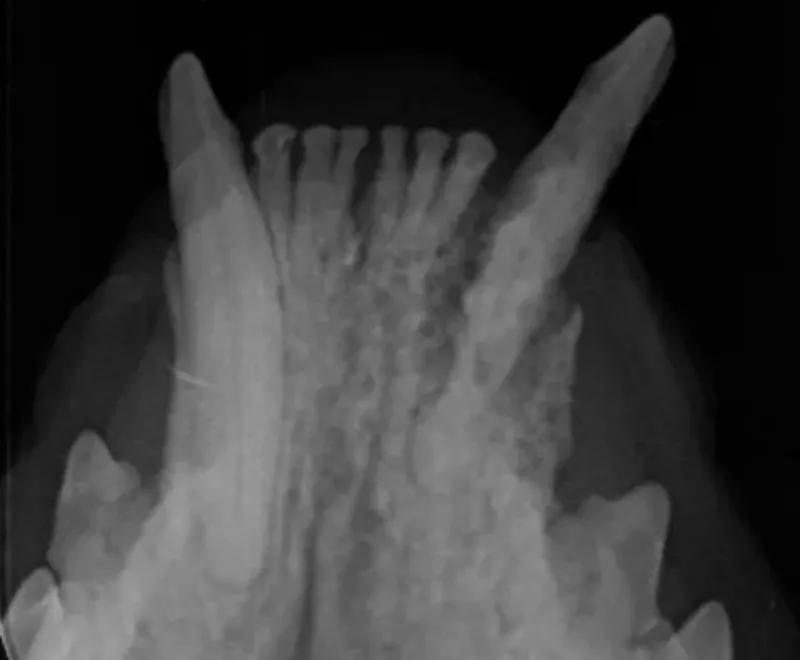
What We Found During Her Dental Procedure
Once Midnight was under anaesthetic, it was clear just how painful her lower left canine tooth was. When the tooth was gently probed, she showed a teeth-chattering pain response, something cats can do when a sore tooth is touched, even if they’ve shown little or no sign of discomfort at home.
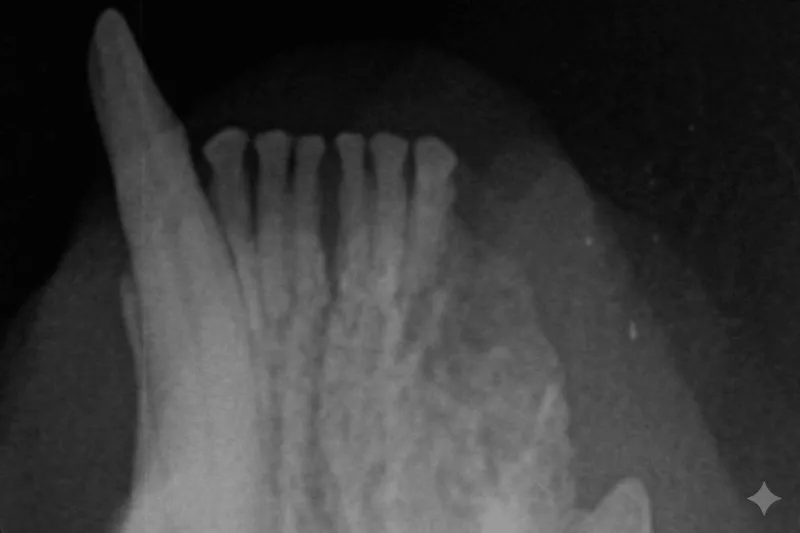
Dental X-rays revealed infection affecting the bone and surrounding tissues, with the tooth being pushed out of its socket by advanced periodontal disease and external root resorption. The tooth was extracted, the infected tissue was carefully removed, and Midnight went home with antibiotics to help clear the infection.
Tooth Resorption Was Affecting More Than One Tooth
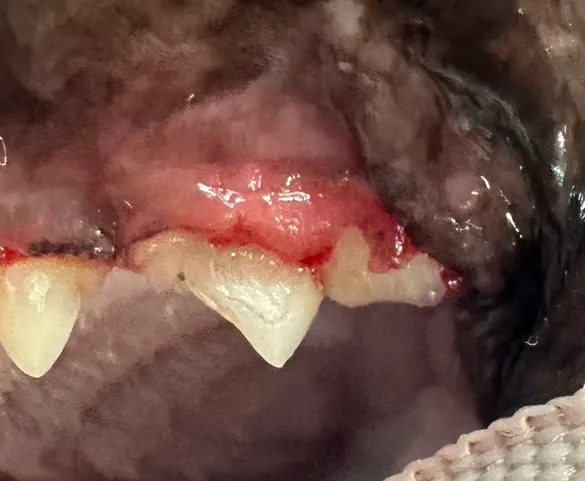
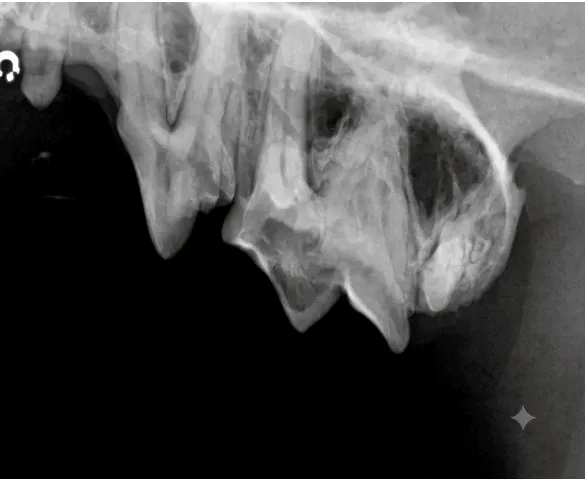
While examining Midnight’s mouth and reviewing her dental X-rays, we also discovered three additional teeth affected by Type 1 tooth resorption.
Tooth resorption is one of the most common and painful dental conditions seen in cats. It gradually destroys the enamel, dentine and sometimes the pulp cavity. Some affected teeth develop visible holes or defects, while others look almost normal despite being painful.
The exact cause is still unknown, but it is estimated to affect up to 70% of cats over five years of age. Unlike a cavity in people, tooth resorption can’t be repaired with a filling. Once the tooth becomes painful or structurally damaged, extraction is the only effective treatment.
“Dental X-rays are essential for identifying the full extent of tooth resorption and planning the most appropriate treatment.”
Back to Enjoying Her Food
All of Midnight’s diseased teeth were removed, and her remaining teeth were professionally cleaned during the procedure.
At her post-operative check, her extraction sites had healed beautifully, and she was already back to happily eating her kibble.
Why Regular Dental Checks Are So Important for Cats
Cats often hide pain incredibly well, which means serious dental disease can develop long before there are any obvious signs at home. Regular health checks, dental examinations and dental X-rays allow us to identify painful conditions like tooth resorption early and treat them before they become even more advanced.
If you’ve noticed changes in your cat’s breath, eating habits or comfort, or it’s been a while since their last dental assessment, our veterinary team is always happy to discuss the options and help you decide what’s right for your cat.
Veterinary Services
Trusted veterinary care across every life stage, from vaccinations and surgery to diagnostics, dental, and exotic care.


Frequently Asked Questions
How can cats have painful dental disease without showing obvious signs?
Cats instinctively hide pain, so many continue eating and behaving normally despite significant dental disease. Midnight’s case is a good example of why regular health checks and dental examinations are so important for identifying painful conditions early.
What is tooth resorption in cats?
Tooth resorption is a common and painful dental condition where the tooth gradually breaks down over time. It can affect the enamel, dentine and pulp cavity, and some affected teeth show very few visible signs despite causing significant discomfort.
Can tooth resorption in cats be treated without extracting the tooth?
Unfortunately not. Unlike a cavity in people, tooth resorption cannot be repaired with a filling. Once a tooth has become painful or structurally damaged, extraction is the only effective treatment.
Why are dental X-rays important during a cat's dental procedure?
Dental X-rays allow vets to assess the structures below the gumline that cannot be seen during a visual examination alone. In Midnight’s case, they revealed three additional teeth affected by Type 1 tooth resorption as well as the full extent of the disease affecting her canine tooth.
What signs could mean my cat needs a dental assessment?
Changes in breath, eating habits or overall comfort can all indicate an underlying dental problem. However, because cats often hide oral pain, many painful conditions are only discovered during routine health checks and dental examinations.

Google Rating
4.7

I would like to say a massive thank you to Dr Nicole and the rest of the team for fitting in our dog for a torn dew claw this morning on such short notice. Ashlee on the phone was so lovely and quick to make the appointment for me. Our girl was treated with such care and we are very grateful 💕
Tiarna H.
Google Rating
4.7
Best vets I’ve ever been to with rabbits! Vet was so kind, gentle & knowledgeable. She not only looked after the unwell bunny, but also took our other bunnies at home into consideration. All staff were so helpful. The follow up phone call & sympathy card were so appreciated & such a beautiful touch. Will never take our pets anywhere else after such an amazing experience! 🩷
La fee
Google Rating
4.7
I was referred to Edgeworth vets as they have experience with bunnies and took my rabbit Ross there, he was old and not able to be saved so I had make the hard decision to have him put to sleep. The staff there were so kind and the vet I saw Kimberly was amazing. She was very kind and supportive and so gentle with Ross. I was able to stay with him while he passed and she talked me through everything. I’m so grateful to them that they helped Ross pass in a peaceful manner and cannot recommend them highly enough.
Katherine J.
Google Rating
4.7
Got recommended this business today for a very sick bunny, they got her straight in and were amazing. They kept us updated with care and compassion and although we lost our beautiful girl they were amazing. Would highly recommend this business and staff.
Thank you for caring and trying to save our sweet girl.
Peta L.
Google Rating
4.7
Thank you for the compassion your staff provided on Friday. ALL your staff were so lovely to us. We weren’t a regular client but you guys accommodated us, were empathetic and helped us in a really difficult time. I’m so thankful that I called and would highly recommend this veterinary service.
Jon B.
Google Rating
4.7
Booked it our new kitten for his first vet visit after we purchased him. The staff was so helpful and nice, plus they help us out after he did not enjoy the car trip very much. But they made him feel welcome and helped me out. The vet we sure was so helpful and answered all our questions. They even gave us a little info pack about our kitten etc. They were recommended to us by a good friend and I would 100% recommend them to anyone that has a pet that needs a caring vet.
Ian K.
Google Rating
4.7
These guys truly care. I couldn’t get my rabbit into his usual vet, however, they took him. Unfortunately it was the end of the journey for Boris and they were helpful, compassionate and loving the whole way. I even got a sympathy card 2 weeks later. Thank you for your love and care.
Kristy H.
Google Rating
4.7
Fantastic vets, we have been bringing our chickens here for 3 years now and have no complaints. Recently moved our cats to Edgeworth as well. All vets we have seen here have been great as well as the vet nurses. The receptionists are very helpful, its a releif to walk in the door and know that our pets are going to be well looked after.
Annette F.
Google Rating
4.7
Thank you for the beautiful card and condolences to our family after losing a battle with Jet. She tried so hard and fought like a little champion that she was. Thank you for your ongoing support, care, advice, and strength you showed to us, so that we could be strong. Unfortunately, little Jet succumbed to her many health issues but is now pain free. We will be under Edgeworth Animal Hospital for all of feathered family members. I couldn’t have asked for more
Debbie H.
Google Rating
4.7
I had an emergency with my cat, and came without an appointment. I was seen straight away. Every single interaction I had with the lovely people at this vet was amazing. They are so kind and go 110% for your fur baby. They went above and beyond and made this cat dad feel like everything was going to be ok. I cannot thank them enough.
James D.

Contact Info


After-Hours Emergencies
Contact AREC(Animal Referral & Emergency Centre)
1300 838 669