
735 Main Rd, Edgeworth,
NSW, 2285


There’s something special about the way an animal responds to a familiar face. But when it comes to continuity of care, the benefits extend well beyond warmth and recognition. Many conditions and illnesses only cause subtle changes. A vet who has walked alongside your pet for years will notice things others won’t, and there’s immense value in that alone.
At Edgeworth Animal Medical Centre, we’re a local, independent clinic that believes great care begins with genuine relationships. We take the time to understand each patient and offer straightforward, thoughtful guidance. Whether your pet has fur, feathers, or scales, we’re here from their earliest days right through to their later years. Being involved in that full journey gives us a broader perspective that makes a difference.
“A vet who has walked alongside your pet for years will notice things others won’t, and there’s immense value in that alone.”
Why continuity of care matters in veterinary medicine
When a pet sees the same vet consistently, it becomes much easier to follow their treatments, health patterns and small behavioural shifts, and to understand how these connect to what we’re seeing today. With a brand new patient, we begin with the problem in front of us, and while we will always give them the best care possible, it isn’t the same as having years of context. An ongoing relationship gives us a clearer, more informed picture of your pet’s health.
Reading through pages of clinical notes, especially those transferred from another clinic, can be useful, but it can also be time-consuming and may not offer the same depth of insight that comes from having managed a case personally. Even when a pet sees different vets within the same practice, the process is easier because the records are accessible and written in a familiar format.
When we’ve looked after a pet for a long time, we remember the things that matter. We know which medications have suited them, what has caused problems in the past and which management approaches have helped most. Every vet may do things a little differently, so having one person guide a pet’s care brings everything together in a way that supports better outcomes for the patient.
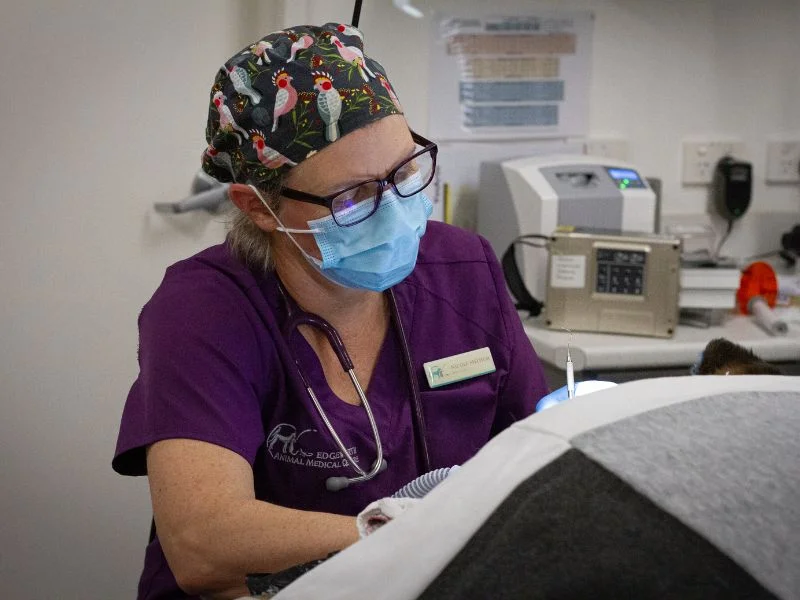
Subtle changes we can notice when we know your pet well
Just as with people, some things are perfectly normal for certain animals while others are not. The better we know a pet, the clearer we can recognise subtle changes in behavioural or physical patterns that may raise alarm. If they’re not interacting as they would or their mobility is clearly more limited, their coat condition has declined, or there’s been a shift in demeanour, these are observations that sometimes even the owner hasn’t seen yet.
We also learn their individual quirks. Every patient has a preferred way they like to be handled, certain things that stress them, and different treats or distractions that help them stay settled. Understanding these details makes examinations smoother and helps us accurately identify health issues faster.
“Strong relationships between vets, pets and their owners will create a foundation of trust that changes the whole experience.”
How strong vet–pet–owner relationships improve outcomes
Strong relationships between vets, pets and their owners will create a foundation of trust that changes the whole experience. When owners feel comfortable discussing concerns, and when pets feel at ease, consultations become more efficient and less overwhelming for everyone.
This is even more important for pets with chronic conditions. With continuous care from the same veterinarian, owners are often more confident implementing long-term management strategies, and pets are less anxious about their visits as the environment is familiar. This rapport results in stronger communication, earlier detection of issues and ultimately, better health outcomes.
How continuity of care transformed Henree’s diagnosis and long-term treatment
Henree is a sweet little Whippet we’ve cared for over the past four years, since he was a puppy, so we’ve come to know his normal behaviour, energy, and temperament very well. About a year ago, he came in with digestive upset, lethargy and signs of abdominal pain, and because we knew him so closely, it was immediately clear that something wasn’t right.
He was admitted for further testing, as there were several possible causes. His initial bloodwork showed some unusual abnormalities that raised our suspicion for Addison’s disease, an uncommon but serious condition where the adrenal glands fail to produce enough cortisol. Knowing his baseline health is what made those subtle changes stand out. We sent off the confirmatory blood test, and by the next day the diagnosis was official. Henree was able to start appropriate treatment immediately and avoided what can often be a lengthy and difficult diagnostic journey.
I now see Henree for every visit as part of managing his Addison’s disease, and that ongoing relationship makes his care straightforward. I already know his medications, how he tends to respond and what his family prefers, which means we can focus on his needs and provide the most informed care possible. Seeing him regularly also means we can safely adjust his treatment when needed. We’ve been able to reduce his medication dose and extend the interval between injections while still monitoring him closely.
Over time, we’ve learned exactly how he prefers to be handled, which injection sites suit him best, which treats keep him settled and that he is far calmer when examined outdoors. These small insights keep his visits comfortable and allow us to tailor his care in a way that works for him.
A summary of the benefits for complex or lifelong conditions
As Henree’s story illustrates, continuity becomes even more valuable when a pet lives with a condition that needs long-term monitoring or ongoing treatment. To summarise:
- Chronic disease management is smoother when one vet follows the case
- History stays top of mind, allowing quicker and more confident decision-making
- Treatment plans stay cohesive rather than fragmented
- Care becomes truly personalised and adapts as the pet’s needs change
“Continuity of care offers something simple yet powerful. It helps your pet feel settled and helps us make decisions that align with who they are and what they need.”
Care that grows with your precious pet
Continuity of care offers something simple yet powerful. It helps your pet feel settled and helps us make decisions that align with who they are and what they need. Regardless of where you go for veterinary care, feel free to ask to see the same vet wherever possible, especially if your pet has complex medical concerns.
At Edgeworth Animal Medical Centre, we love being part of your pet’s story. Watching animals grow up alongside their families and supporting them through each stage of life is one of the most rewarding parts of our work. If you’re looking for a local vet to walk that journey with you, we’d be glad to help. Contact our friendly team today.
By Dr Nicole Melhem
Back to All Articles
Veterinary Services
Trusted veterinary care across every life stage, from vaccinations and surgery to diagnostics, dental, and exotic care.


Frequently Asked Questions
Why should I bother trying to see the same vet every time?
Seeing a familiar face helps your pet feel settled and builds a solid relationship. A vet who knows their history well—beyond just the written notes—can spot those subtle changes in health or behaviour that pages of notes might miss. This consistency leads to quicker, more accurate diagnosis and care.
Does continuity of care really help with catching illnesses early?
Absolutely. Because your regular vet is familiar with your pet’s personal ‘normal’ quirks, they are better placed to recognise minor physical or behavioural shifts. If your pet is being a bit quiet, moving differently, or their coat is looking a bit crook, those small signs stand out more easily, leading to earlier detection and better treatment outcomes.
What sort of benefits does continuity of care offer if my pet has a chronic or long-term health condition?
It’s a game-changer. When one vet manages a lifelong condition, the treatment plan stays cohesive rather than becoming fragmented. They already know which medications have suited your pet in the past, allowing for quicker, more confident decision-making and safer adjustment of treatment doses over time.
How does having a strong relationship with the vet help me, the pet owner?
It’s all about trust and clear communication. When you feel comfortable with your vet, you are more likely to discuss concerns openly. This rapport means consultations are more efficient, less overwhelming, and owners feel more confident and supported when implementing complex or long-term management strategies at home.
If I can’t get an appointment with my usual vet, will another vet in the clinic still know my pet’s history?
Yes. We’re a close-knit independent clinic, and we do our best to provide consistency. Even if you see a different vet at Edgeworth Animal Medical Centre, the care is easier because your pet’s records are fully accessible, up-to-date, and written in a familiar format. While we always strive to schedule you with your preferred vet, our team approach ensures your pet’s history is well-understood for every visit.

Contact Info


After-Hours Emergencies
Contact AREC(Animal Referral & Emergency Centre)
1300 838 669