
735 Main Rd, Edgeworth,
NSW, 2285


Most people with furry companions at home have scooped, wiped or stepped around evidence of a problem without even realising it was one. Toileting is such a natural function for all living beings that subtle changes in frequency, amount or consistency may not ring alarm bells straight away. However, the urine and bowel motions our pets pass can be significant clues to a range of health issues.
At Edgeworth Animal Medical Centre, we’re a local, independent clinic offering lifetime healthcare for local pets, including advanced diagnostics and in-house testing to help get to the bottom of health concerns quickly. That’s good news for anyone who walks in with concerns of the body waste elimination variety.
We’ve seen many dogs, cats and rabbits with all sorts of troubles, so here’s what these changes can mean, when to be concerned and how to prepare for a visit.
“The urine and bowel motions our pets pass can be significant clues to a range of health issues.”
What changes in bowel habits can reveal
Not everyone has the stomach for a conversation about poop, but if you’ve got pets, hopefully you do. Bowel habits include how often they go, whether they’re struggling and the consistency of what comes out. All of these can tell us something.
Diarrhoea is one of them. It has many causes, from relatively simple dietary issues or eating something they shouldn’t off the floor or while on a walk to much more serious diseases, including Parvovirus, the parasite Giardia or inflammatory conditions like inflammatory bowel disease.
The characteristics of the motion matter. Shape, colour and texture, whether any blood is present and what your vet can see under a microscope all help narrow down what’s going on.
On the other side of the spectrum, we have constipation. In dogs, a common cause we see is chewing on bones. Because they undergo very little digestion as they pass through the gastrointestinal tract, they can form hard concretions of faeces containing sharp pieces of bone. These can be painful and sometimes even impossible for them to pass.
Older male dogs that haven’t been desexed can also have trouble passing a bowel motion due to an enlarged prostate. The gland can put pressure on the colon, making it harder to empty the bowels or causing unusually thin stools. Fortunately, this is generally a fairly easily treatable condition.
Rabbits are a little different because of their anatomy and hindgut digestion. A healthy rabbit should produce more than 100 firm, plump faecal pellets each day, with a regular and consistent output. Any reduction in the number of pellets or any diarrhoea is a good reason to speak with your vet.
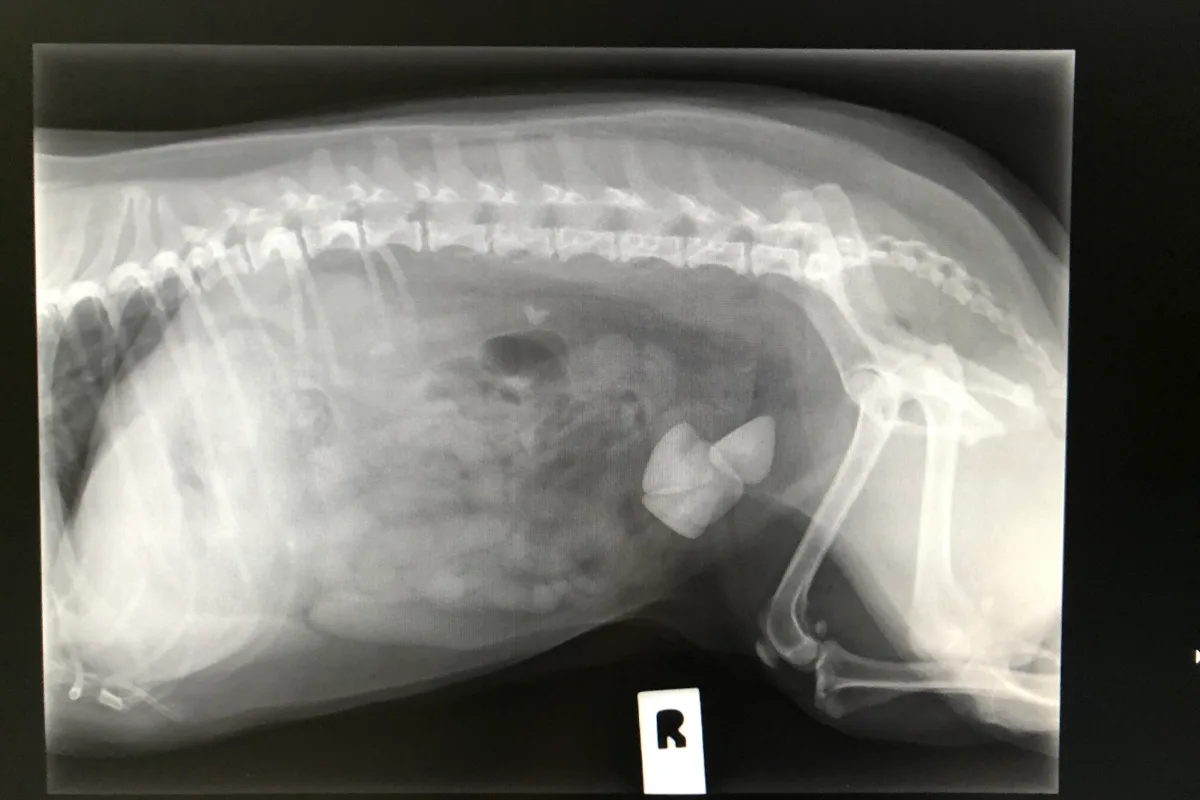
A number of large stones can be seen in the bladder of this dog with abdominal radiographs.
What changes in urination can tell us
When it comes to urination, more and less can each be telling, and they usually point to very different problems. An increase is important to note and mention to your vet, but it’s not typically an emergency in the early stages. A decrease could mean a blockage in the urinary tract, or that your pet is dehydrated because less urine is being made. These conditions tend to be far more severe and can even be emergencies.
Increased urination can be associated with conditions such as kidney disease, thyroid disease or diabetes. It can also occur with a urinary tract infection.
Cats can sometimes develop stress-related cystitis, which is inflammation of the bladder. They may make frequent trips to the litter tray but only pass small amounts of urine or start urinating in unusual places, like the shower, bathtub or floor.
They can also appear uncomfortable or in pain. In cats under 10, these signs are less likely to be caused by an infection and can instead be due to diet, external stressors or tension between cats in the home.
In dogs, frequent urination or straining can occur with bladder stones or, in some cases, a tumour in the bladder that makes it difficult to empty (void) properly. Blood in the urine is also possible.
When frequent urination persists for an extended period, kidney problems that cause protein loss may be involved. Other symptoms include increased thirst and weight loss, with kidney failure a risk as the condition progresses.
When a toileting change becomes an emergency
While your pet may already have some well-established toileting habits or be known to have the odd experience of diarrhoea due to intolerances, there are some changes that do need veterinary attention right away. For example, a cat that keeps going in and out of the litter tray without producing any urine. This is particularly crucial if the cat is male. A complete urinary blockage can become life-threatening within just a few hours and lead to kidney failure or even cardiac arrest.
Profuse diarrhoea also requires urgent care, and this is even more crucial for puppies, kittens and smaller pets. Size matters, because these little ones just don’t have the same reserves that a 40kg Labrador does. They can become severely dehydrated and shocky very quickly. In some cases, this can progress to organ failure.
Rabbit families, if your pet hasn’t passed any pellets in the last eight hours, immediate veterinary care is required.
An important thing to keep in mind is that going to the toilet shouldn’t hurt. If your pet is in obvious pain or vocalising when trying to urinate or pass a bowel motion, don’t wait to see if it settles on its own.
What to note and bring before your vet visit
If you have any concerns about elimination, a little information can go a long way in helping us figure it out. Before your appointment:
- Note when your pet last passed a normal bowel motion or how long the change in their urination has been happening.
- Check bowel motions for consistency, colour, shape, blood or anything unusual, such as grass, worms, fabric or plastic.
- Take a video if your pet is struggling to urinate or defecate.
- Bring a urine or faecal sample if you can. Keep it refrigerated in a ziplock bag, write down the date and time it was collected and bring it in as soon as possible.
- If you need to collect urine from a cat, call us for advice. We can provide tips or non-absorbent plastic bead litter to make collection easier.At EAMC, we can run tests on the sample at the clinic, although some cases will require further testing at a laboratory for a firm diagnosis.
Poo, pee and when to call the vet
You know your pet better than anyone. If something doesn’t look, seem or smell right, there could be a perfectly logical medical explanation, ranging from something relatively minor to something very serious. That’s why it’s important not to ignore it.
If you’ve noticed something unusual when your pet goes to the toilet, contact Edgeworth Animal Medical Centre or book an appointment to have it checked.
By Dr Kimberley Earl
“Bowel habits include how often they go, whether they’re struggling and the consistency of what comes out. All of these can tell us something.”
Veterinary Services
Trusted veterinary care across every life stage, from vaccinations and surgery to diagnostics, dental, and exotic care.


Frequently Asked Questions
Why is my cat going to the litter tray frequently but not urinating?
A cat repeatedly going to the litter tray without producing urine could have a urinary blockage. This is particularly serious in male cats and can become life-threatening within hours. Seek veterinary care immediately.
Why is my pet urinating more than usual?
Increased urination can be associated with kidney disease, thyroid disease, diabetes or a urinary tract infection. Persistent frequent urination can also occur with kidney problems that cause protein loss.
Why is my cat urinating outside the litter tray?
Cats with stress-related cystitis may urinate in unusual places such as showers, bathtubs or on the floor. They may also visit the litter tray frequently, pass only small amounts of urine or appear uncomfortable.
When is diarrhoea an emergency in pets?
Profuse diarrhoea requires urgent veterinary care, particularly in puppies, kittens and smaller pets. They can become severely dehydrated and shocky quickly, and severe cases can progress to organ failure.
How long can a rabbit go without pooping?
If a rabbit hasn’t passed any pellets for eight hours, immediate veterinary care is required. At this point, they are considered to be in gut stasis.

Contact Info


After-Hours Emergencies
Contact AREC(Animal Referral & Emergency Centre)
1300 838 669