
735 Main Rd, Edgeworth,
NSW, 2285


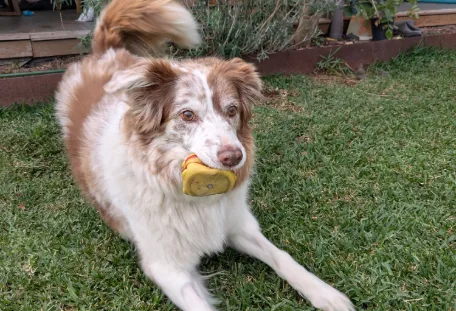
It Started With A Change in Behaviour
Astro’s family knew something wasn’t quite right. Their 10-year-old Border Collie cross was losing weight despite having a big appetite, drinking far more than usual and had started behaving differently around food.
But Astro has never been particularly keen on veterinary examinations. He’s much happier at home with his family, where he takes his role looking after the younger children very seriously. So when he first came to see Dr Joyce, we had to keep his examination brief, and then we arranged for him to return the following day after medication to help him feel calmer.
His second visit, unfortunately, revealed a much more serious problem than his family had expected.
“Astro’s family knew something wasn’t quite right. He was losing weight despite having a big appetite and drinking far more than usual.”
An Unexpected Result in Astro’s Blood Tests
On Astro’s return, he was much happier and calm enough for Dr Perin to assess him and take some blood samples.
One thing that immediately stood out was his calcium level being very high at 3.62 mmol/L. This helped explain why he had been drinking and urinating so much, but it also raised concerns about an underlying cancer.
A rectal examination found a large, misshapen mass associated with Astro’s right anal sac, around two-thirds the size of an apricot. His medial iliac lymph nodes, which sit internally between the colon and spine, were also enlarged. This raised concern that the disease may already have spread beyond the primary tumour.
The likely diagnosis was anal sac adenocarcinoma.
Making a Difficult Decision About Surgery
This was serious news for Astro’s family. His excessive drinking, weight loss and changes in behaviour were already affecting his quality of life, and without treatment, his outlook was not good.
Surgery to remove the primary tumour, followed by treatment with a new generation chemotherapy for dogs with certain cancers, was put forward as an option. Dr Perin discussed both the potential benefits and the significant risks associated with operating in this area, including faecal incontinence, bowel damage and wound complications.
After taking a couple of days to consider, Astro’s family decided they weren’t ready to lose him.
Astro returned for surgery, where Dr Perin carefully removed the right anal sac and associated tumour. His anaesthetic remained stable throughout the procedure, his recovery was routine and he was able to go home that afternoon.
Testing of the removed tissue confirmed that Astro had an anal sac adenocarcinoma. His treatment plan was to begin chemotherapy after surgery, with his family able to give the tablets to him at home three times a week. It didn’t take long for everyone to notice a change.
Within days of surgery, Astro’s constant drinking had reduced towards normal. At his wound check just over two weeks later, his family reported that the excessive thirst had stopped almost immediately after the primary tumour was removed. He had also perked up enormously and was much more active around the house.
“A few months after a diagnosis that could have taken him from his family very quickly, Astro is back to enjoying a normal life at home.”
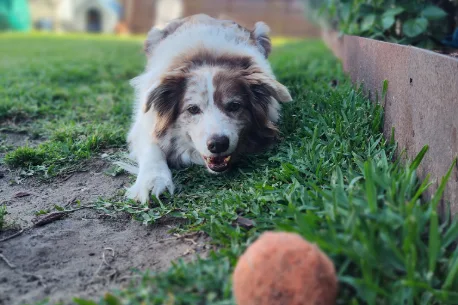
Living With Cancer After Surgery
Removing Astro’s primary tumour was only one part of his treatment. Because his internal lymph nodes were already enlarged, chemotherapy was continued with the aim of keeping the remaining disease stable.
At his next recheck, Astro was taking the medication without any noted side effects. His stools were normal, he was back to his usual self and his surgical site had healed well.
Importantly, his enlarged lymph nodes had not increased in size. Dr Perin assessed his disease as stable, so the decision was made to continue with the existing treatment.
Astro’s family will now keep an eye on his drinking and his stools at home. Changes in stool width can sometimes indicate that enlarged internal lymph nodes are placing pressure on the colon, so this gives another useful way to monitor him between veterinary checks.
Back to Being Astro
Astro’s cancer hasn’t disappeared. He will need ongoing treatment and monitoring. But a few months after a diagnosis that could have taken him from his family very quickly, he is back to enjoying a normal life at home.
For a dog who would much rather avoid veterinary attention altogether, Astro has been through a lot. Careful use of medication before his visits has allowed us to examine and monitor him without putting him through unnecessary stress, while his family have taken on his ongoing treatment at home.
Veterinary Services
Trusted veterinary care across every life stage, from vaccinations and surgery to diagnostics, dental, and exotic care.


Frequently Asked Questions
What are the signs of anal sac adenocarcinoma in dogs?
Signs can vary. In Astro’s case, weight loss despite a big appetite, excessive drinking and urination and changes in his behaviour around food led his family to seek veterinary advice.
Can anal sac adenocarcinoma cause excessive thirst in dogs?
Yes. Astro had a very high calcium level, which helped explain his excessive drinking and urination. The abnormal result also raised concerns that an underlying cancer could be responsible.
How is anal sac adenocarcinoma diagnosed in dogs?
Astro’s anal sac mass was found during a rectal examination after his blood tests showed a very high calcium level. Testing of the tumour after its surgical removal confirmed anal sac adenocarcinoma.
How is anal sac adenocarcinoma treated in dogs?
Treatment depends on the individual dog and their disease. Astro underwent surgery to remove his right anal sac and primary tumour, followed by ongoing treatment with Palladia, a chemotherapy medication.
Can dogs live with anal sac adenocarcinoma after surgery?
Astro still has cancer and requires ongoing treatment and monitoring. At his follow-up, his enlarged lymph nodes had not increased in size, his disease was considered stable and he was back to his usual self.

Google Rating
4.7

I would like to say a massive thank you to Dr Nicole and the rest of the team for fitting in our dog for a torn dew claw this morning on such short notice. Ashlee on the phone was so lovely and quick to make the appointment for me. Our girl was treated with such care and we are very grateful 💕
Tiarna H.
Google Rating
4.7
Best vets I’ve ever been to with rabbits! Vet was so kind, gentle & knowledgeable. She not only looked after the unwell bunny, but also took our other bunnies at home into consideration. All staff were so helpful. The follow up phone call & sympathy card were so appreciated & such a beautiful touch. Will never take our pets anywhere else after such an amazing experience! 🩷
La fee
Google Rating
4.7
I was referred to Edgeworth vets as they have experience with bunnies and took my rabbit Ross there, he was old and not able to be saved so I had make the hard decision to have him put to sleep. The staff there were so kind and the vet I saw Kimberly was amazing. She was very kind and supportive and so gentle with Ross. I was able to stay with him while he passed and she talked me through everything. I’m so grateful to them that they helped Ross pass in a peaceful manner and cannot recommend them highly enough.
Katherine J.
Google Rating
4.7
Got recommended this business today for a very sick bunny, they got her straight in and were amazing. They kept us updated with care and compassion and although we lost our beautiful girl they were amazing. Would highly recommend this business and staff.
Thank you for caring and trying to save our sweet girl.
Peta L.
Google Rating
4.7
Thank you for the compassion your staff provided on Friday. ALL your staff were so lovely to us. We weren’t a regular client but you guys accommodated us, were empathetic and helped us in a really difficult time. I’m so thankful that I called and would highly recommend this veterinary service.
Jon B.
Google Rating
4.7
Booked it our new kitten for his first vet visit after we purchased him. The staff was so helpful and nice, plus they help us out after he did not enjoy the car trip very much. But they made him feel welcome and helped me out. The vet we sure was so helpful and answered all our questions. They even gave us a little info pack about our kitten etc. They were recommended to us by a good friend and I would 100% recommend them to anyone that has a pet that needs a caring vet.
Ian K.
Google Rating
4.7
These guys truly care. I couldn’t get my rabbit into his usual vet, however, they took him. Unfortunately it was the end of the journey for Boris and they were helpful, compassionate and loving the whole way. I even got a sympathy card 2 weeks later. Thank you for your love and care.
Kristy H.
Google Rating
4.7
Fantastic vets, we have been bringing our chickens here for 3 years now and have no complaints. Recently moved our cats to Edgeworth as well. All vets we have seen here have been great as well as the vet nurses. The receptionists are very helpful, its a releif to walk in the door and know that our pets are going to be well looked after.
Annette F.
Google Rating
4.7
Thank you for the beautiful card and condolences to our family after losing a battle with Jet. She tried so hard and fought like a little champion that she was. Thank you for your ongoing support, care, advice, and strength you showed to us, so that we could be strong. Unfortunately, little Jet succumbed to her many health issues but is now pain free. We will be under Edgeworth Animal Hospital for all of feathered family members. I couldn’t have asked for more
Debbie H.
Google Rating
4.7
I had an emergency with my cat, and came without an appointment. I was seen straight away. Every single interaction I had with the lovely people at this vet was amazing. They are so kind and go 110% for your fur baby. They went above and beyond and made this cat dad feel like everything was going to be ok. I cannot thank them enough.
James D.

Contact Info


After-Hours Emergencies
Contact AREC(Animal Referral & Emergency Centre)
1300 838 669